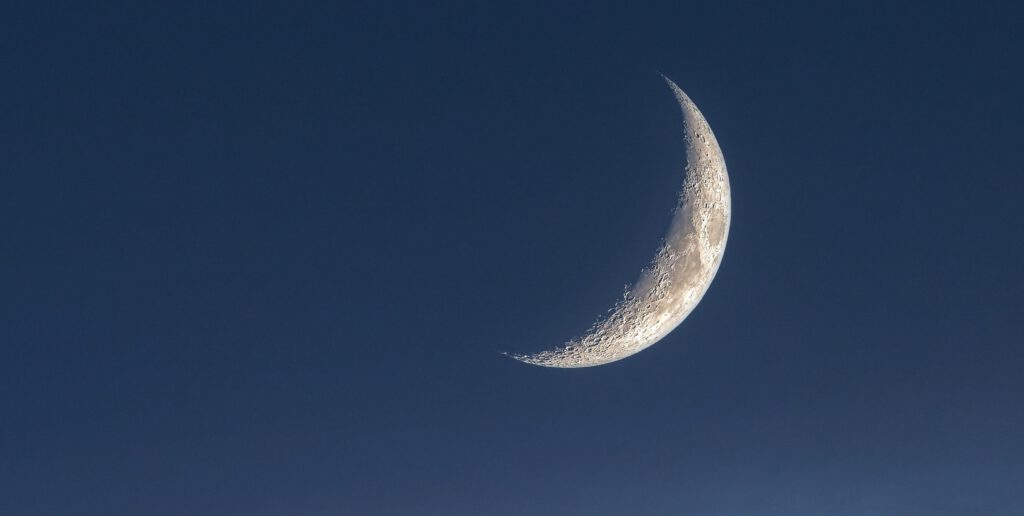
Explanation Regarding the Determination of the Beginning of the Lunar Months
The determination of the beginnings of the lunar months is among the significant matters in Islamic legislation (Sharia), as it is connected to important acts of worship such as fasting, the pilgrimage (Hajj), and other acts of worship that are tied to the timing of the new moons.
In modern times, a discussion has emerged regarding relying on astronomical calculations to determine the beginning of the lunar month.
The established position, based on the Book (Qur’an), the Sunnah, and the consensus of the righteous predecessors (Salaf as-Salih) among the Companions, is as follows:
The beginning and the end of the month are determined solely by the sighting of the new moon (hilal) or by completing the count to thirty days.
Shaykh al-Islam Ibn Taymiyyah reported a consensus that relying on astronomical calculations to determine the month is a misguided innovation (bid‘ah).
The scholars have consistently maintained that the beginning and the end of fasting are determined by moon sighting and not by astronomical calculation.
The evidences for this will be presented below.
First: The Evidence from the Qur’an
Allah, the Exalted, says: “They ask you about the new moons. Say: They are time markers for the people and for the pilgrimage.” (Surah Al-Baqarah: 189)
The aspect of evidence: Allah, the Exalted, has made the new moons as time markers for the people, meaning that the appearance of the new moon is the sign by which the beginning of the month is recognized.
Ibn Kathir said in his Tafsir: “That is, Allah has made them as time markers for the people regarding their fasting, their breaking of the fast, their pilgrimage, and the waiting period of their women.”
Second: The Evidence from the Sunnah
Hadith of Ibn Umar (may Allah be pleased with both of them): The Messenger of Allah ﷺ said:
“Fast when you see it and break the fast when you see it. And if it is hidden from you, then estimate it (or complete the period).” Reported by Al-Bukhari and Muslim.
The aspect of evidence: The Prophet ﷺ linked fasting and breaking the fast to the sighting of the new moon.
Hadith of Abu Huraira (may Allah be pleased with him): The Messenger of Allah ﷺ said:
“Fast when you see it and break the fast when you see it. And if it is hidden from you, then complete the count of Sha‘ban to thirty.” Reported by Al-Bukhari and Muslim.
The aspect of evidence: The Prophet ﷺ instructed that when sighting is not possible, the month should be completed to thirty days, and he did not mention astronomical calculation.
Hadith of Ibn Umar (may Allah be pleased with both of them): The Messenger of Allah ﷺ said:
“We are an unlettered nation; we neither write nor calculate. The month is like this and this.”
Reported by Al-Bukhari and Muslim.
The aspect of evidence: The Prophet ﷺ clarified that knowledge of the beginning of the month is established either through sighting or by completing the count.
Third: The Statements of the Scholars
Ibn Taymiyyah (may Allah have mercy on him) said: “It is not permissible, according to the consensus of the Salaf, to rely on calculation in confirming the new moon.” (Majmu‘ al-Fatawa 25/132)
Ibn Hajar al-Asqalani said: “The majority of the scholars are of the view that the ruling is connected to sighting, not to calculation.” (Fath al-Bari 4/127)
Abdul Aziz ibn Baz (may Allah have mercy on him) said: “The obligation is to rely on sighting or completing the count, and not to rely on astronomical calculation.” (Majmu‘ Fatawa Ibn Baz 15/74)
Summary
From the legal evidences and the statements of the majority of scholars, it becomes clear that the determination of the beginning of the lunar months is established through one of two matters: The sighting of the new moon. Completing the count of the month to thirty days.
As for astronomical calculation, it is not relied upon—neither for negation nor for confirmation—and the reference point in all of this is the legislated visual sighting.
Allah, the Exalted, said: “And whoever opposes the Messenger after guidance has become clear to him and follows a path other than that of the believers – We will turn him to what he has turned to and burn him in Hell, and evil it is as a destination.” (An-Nisa: 115)
And the Exalted said: “So let those who oppose his command beware lest a trial (fitnah) strike them or a painful punishment afflict them.” (An-Nur: 63)